
For an OEM or export project, documentation is part of the product. Model identity, test evidence, packaging, compliance files and service contacts must stay aligned from sample approval to repeat order. This article targets the PA system handover documentation template query with a transactional angle for integrator / facility owner. It is written for a buyer who needs a defensible decision, not a list of adjectives.
The working vocabulary is OEM specification, inspection record, private-label change control, export documents and spare parts. Treat each term as a question to answer in the brief. For example, a coverage number needs a location and test condition; a mixer channel count needs an input/output schedule; a private-label promise needs a revision and approval record.
Distinguir entre las decisiones comerciales y las técnicas
Use Categoría de productos relevante de SPE Audio como contexto inicial del catálogo, y luego abre la página exacta del producto antes de copiar una especificación. Actualmente, el sitio presenta amplificadores profesionales, sistemas line array, subwoofers, mezcladores, altavoces de rango completo y sistemas de entretenimiento, pero la configuración del proyecto aún debe confirmarse por escrito.
For an OEM or export brief, connect the sample to the shipment record. Keep the approved model name, revision, artwork, label, carton mark, test record and spare-parts list together. A change that is harmless in engineering can still create a customs, catalogue or service problem if it is not recorded.
| Product identity | Model, revision, label and market | Prevents variant confusion |
|---|---|---|
| Product identity | Model, revision, label and market | Prevents variant confusion |
| Evidencia | Sample record, test report and drawing | Supports approval and compliance |
| Delivery | Carton, pallet, moisture and accessories | Protects the shipment and installation |
| Service | Spare parts, warranty and escalation | Protects the installed base |
Compara los datos, no las cifras más destacadas
Para este tema, el conjunto de referencias técnicas debería incluir European Commission CE marking guidance y NIST standards information. Estas fuentes ayudan a definir un método o una terminología; no sustituyen a un plano de proyecto, a un resultado de medición ni a una declaración del proveedor.
Una buena solicitud de cotización (RFQ) especifica lo que se sabe, lo que se supone y lo que debe verificarse. Además, indica quién es la persona responsable de cada respuesta. Esto evita el error común en el que un distribuidor recibe solo el nombre abreviado de un producto y luego tiene que adivinar los requisitos de espacio, cableado, alimentación, control y servicio.
Cuando sea pertinente un modelo SPE concreto, inclúyelo en el lugar donde se analice la decisión: los detalles del producto SPE correspondiente. Mantén la frase que la rodea específica: indica si la página se utiliza para una familia de productos, un dibujo publicado, una imagen actual o como punto de partida para una cotización.
Aplica la misma disciplina al actualizar el artículo. Si cambia una norma, un reglamento, una página de producto o un método de medición, actualiza la oración y la fila de la tabla correspondientes, en lugar de limitarte a cambiar la fecha. Un comprador debe poder distinguir qué información está actualizada y qué dato aún requiere la confirmación del proveedor.
| Pregunta | Pruebas que se deben solicitar | Propietario |
|---|---|---|
| Pregunta | Pruebas que se deben solicitar | Propietario |
| Is the sample the shipped configuration? | Revision, label and change log | Brand owner |
| Are documents ready for the market? | Declaration, manual and carton marks | Importer |
| How will service be handled? | SLA, spares and escalation path | Distributor |
Preguntas que se deben enviar junto con la solicitud de cotización
Antes de dar tu aprobación, compara la respuesta del proveedor con Recursos de QSC. Si la fuente es una norma o un documento de referencia sobre seguridad, cita su alcance con precisión e indica la jurisdicción correspondiente. Si se trata de una guía de ingeniería, úsala para explicar el método en lugar de presentarla como una certificación de producto.
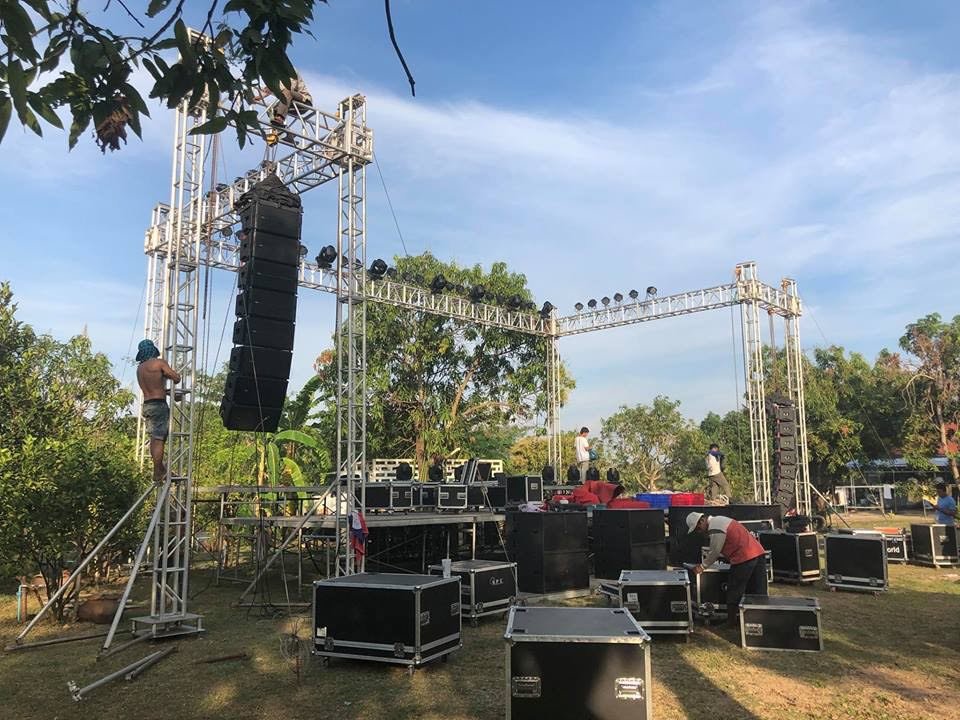
La segunda imagen se incluye aquí porque respalda la decisión tomada en este apartado, no porque cada apartado necesite una decoración. Asegúrate de que el texto alternativo sea descriptivo y de que el identificador del archivo multimedia esté vinculado al registro de la publicación, para que un editor posterior pueda reemplazarlo sin perder el registro de auditoría.
Para la revisión final, usa una segunda referencia detallada sobre SPE en el párrafo donde se aborda específicamente la familia de productos, el componente o la aplicación. Concluye con ProSoundWeb solo cuando esa fuente respalde la afirmación final; de lo contrario, reemplázala por una fuente primaria más cercana durante la próxima auditoría de contenido.
El comprador debe indicar en el artículo una acción específica a seguir: enviar un plano de la habitación, confirmar la lista de entradas y salidas, aprobar una muestra, solicitar un expediente de conformidad, programar una medición o pedir un calendario de repuestos. Esa acción es más útil que un párrafo genérico del tipo “contáctanos”, ya que le indica al proveedor qué información se necesita para dar una respuesta adecuada.
El valor práctico de la guía radica en su trazabilidad. Una persona que no haya redactado la solicitud de cotización original debería poder identificar el modelo elegido, los criterios de comparación, la documentación recibida y el siguiente punto de revisión. Así es como un artículo se vuelve útil para los equipos de ingeniería y compras, en lugar de seguir siendo una página genérica de mercadotecnia.
Cuando un proyecto tenga implicaciones en materia de seguridad o cumplimiento normativo, mantén visible el alcance de la fuente. Los límites de ruido de la OSHA y el NIOSH, por ejemplo, se refieren a la exposición laboral y no deben presentarse como un límite universal para conciertos o para el público. La misma regla se aplica a la documentación de certificación CE, la compatibilidad de redes y las declaraciones de desempeño de los fabricantes: indica los límites y proporciona un enlace a la fuente de respaldo.
Mantén juntos el cuadro final y la respuesta del proveedor. Cuando un comprador posterior pregunte por qué se eligió un modelo, la respuesta debe estar visible en el mismo registro: aplicación, evidencia, suposición abierta, responsable y siguiente acción. Ese pequeño hábito reduce el trabajo de rehacer y hace que las compras repetidas sean más consistentes.
Si la información aún no está disponible, dilo claramente. La frase “A confirmar por el proveedor” inspira más confianza que una cifra que parece precisa pero carece de condiciones de prueba. Además, le da una tarea clara a la siguiente persona y evita que se copie una suposición antigua en una nueva cotización.
Detailed implementation and service notes
A supplier response is stronger when it states the boundary of responsibility. The manufacturer may provide the enclosure, preset, drawing or test report; the integrator may own room prediction, network configuration, rigging approval or local code compliance. Put that split in the handover record. It avoids promising that one product page can answer every engineering or regulatory question.
For procurement, lead time is not the only schedule risk. Sample approval, artwork approval, compliance review, factory inspection, export packing and site access can each become the critical path. Ask which milestone controls the ship date and what information the supplier needs before that milestone can start. A realistic sequence is more useful than an unqualified delivery estimate.
Keep a short exception log when the project departs from the standard package. Note why the change was made, who approved it, what evidence supports it and whether the service team needs a new spare or reset procedure. Exceptions are not automatically a problem; undocumented exceptions are. This log also gives sales and engineering a reliable starting point for the next quotation.
A fair product comparison uses the same operating condition for every candidate. Match level before judging tonal balance, use the same program material where practical and write down placement, processing and room state. For networked equipment, record the switch, clock and firmware context. Without those controls, a listening impression can reflect the test setup more than the product.
Ask for the recovery path, not only the normal path. What happens after a power cycle, a lost network stream, a damaged cable, a failed amplifier channel or a corrupted scene? The answer may be a spare, a bypass, a backup file or a documented reset. Recording it during procurement gives the operator a usable plan when the system is under pressure.
Serviceability should be scored before the order is placed. Check access to connectors, fans, filters, handles, rigging points, fuses and replaceable components. Confirm which parts are stocked locally and which require an international shipment. A slightly different purchase price can be justified when the chosen configuration shortens inspection time and keeps a rental or venue system earning revenue.
If a project crosses borders, align the technical file with the commercial file. Model names, serial-number rules, carton marks, manuals, declarations and invoice descriptions should refer to the same configuration. The importer should know which documents are supplied with the shipment and which are available on request. This is particularly important when a private-label name differs from the factory model code.
Training is part of acceptance for systems operated by non-specialists. Provide a short start-up sequence, a safe operating range, a recovery action and a contact route for escalation. Avoid giving the operator access to settings that can defeat protection or change the approved routing. A clear one-page guide can prevent more service calls than a longer technical manual that nobody opens.
Use the article’s table as a review worksheet rather than a decorative summary. Add a status column in the project copy, assign an owner, and attach the supplier evidence beside each open question. When the quotation changes, update the row and its revision date. This keeps the published explanation useful without pretending that an online article replaces project-specific engineering.
A measurement or audition should state what it cannot prove. One listening position cannot prove uniform coverage; one room cannot prove every acoustic environment; one sample cannot prove an unchanged production run. State the limitation beside the result and define the next check. Honest scope makes the evidence more credible to a professional buyer and reduces overinterpretation by a later reader.
For distributor and OEM teams, capture the commercial reason behind the technical choice. It may be a common spare, a known preset, a compact carton, a local service partner or a consistent product family. Naming that reason helps purchasing protect the decision when a cheaper substitute appears. It also gives sales a factual explanation that can be repeated without inventing performance claims.
Before sign-off, read the supplier reply as if you were the technician receiving the shipment. Could you identify every model, connect it safely, load the correct settings, test the expected result and report a fault? If not, return the RFQ for clarification. A buyer-friendly document is one that can be used by someone who was not present during the original sales conversation.
The final record should contain a next review date. Standards, firmware, product revisions, local requirements and support contacts can change after the purchase. Rechecking the source links and the approved configuration at a sensible interval keeps the specification current without rewriting the whole project history. Mark obsolete evidence rather than silently replacing it.
For PA System Handover Documents Every Integrator Should Deliver, define the decision boundary before comparing models. The brand owner and importing distributor should agree on the application, the listening or operating area, the target outcome and the condition that would reject a proposal. This prevents a supplier from answering a different question with a technically impressive but commercially unusable option. Keep the boundary in the RFQ so every quotation is evaluated against the same brief.
A useful request separates confirmed facts from working assumptions. Confirmed facts may include room dimensions, quantity, power standard, network policy or delivery market. Assumptions must be labeled, especially when they affect OEM specification, inspection record, private-label change control, export documents and spare parts. Ask the supplier to return each assumption with an owner and a method for confirming it. That simple column is often more valuable than another headline specification.
Keep commercial documents and engineering documents synchronized. The quotation, purchase order, packing list, manual and acceptance sheet should use the same model names and revision language. If an accessory is optional, mark it in every document. This sounds administrative, but it is one of the easiest ways to prevent the wrong cable, label, carton or preset from reaching a site where the installation team is working against a fixed opening date.
When the project is complete, capture one lesson that should change the next RFQ. It may be a missing drawing, a late compliance document, an overlooked spare, a useful measurement position or a training step that operators misunderstood. A short lesson record turns a single purchase into better procurement practice and gives the supplier a concrete basis for improving the next response.
For a complex PA System Handover Documents Every Integrator Should Deliver purchase, add a small decision register to the internal project file. List each open item, the person who must answer it, the evidence expected, the date requested and the consequence of leaving it open. This is especially useful when a quotation crosses sales, engineering, logistics and service teams. It turns a long email chain into a visible sequence of decisions and makes it easier to explain why a model was selected when the project is reviewed later.
A good acceptance record also protects the supplier from an unfair comparison. State the room condition, program material, gain setting, processing revision, measurement position and environmental condition used for the check. If the result is outside the agreed tolerance, record the observation before changing a preset or moving a cabinet. That order matters: otherwise a later adjustment can hide the original problem and make the parties disagree about what was actually tested.
When the product will be sold under a distributor or private label, agree on the language that may appear in the catalogue. Avoid combining values from different revisions, optional accessories or different test methods. A short product-data sheet should identify the exact configuration, the source of each critical value and the date of approval. This gives sales a usable document while keeping engineering free to explain project-specific limits in the quotation.
The service plan should be written before the first failure. Identify the common consumables, the parts that can be changed locally, the tools required, the diagnostic information to collect and the escalation contact. For networked or DSP-based systems, preserve the approved file in a controlled location and test that it can actually be restored. A backup that has never been opened is only an assumption, not a recovery method.
Handover checklist
Handover checklist should be recorded as a short project note: model and revision, evidence requested, responsible owner, date, open assumption and next action. If a result depends on a room measurement, factory inspection or current compliance file, leave it open until the evidence is received rather than turning an assumption into a claim.
Envía a SPE Audio la solicitud, la cantidad, el mercado objetivo, las condiciones de instalación o de gira, los estándares de potencia, las necesidades de marca y los documentos requeridos. Ese resumen le brinda al proveedor suficiente contexto para presentar una propuesta comparable sin que el comprador tenga que interpretar textos de mercadotecnia genéricos.


